Warning Signs of a Failing Septic Tank (And What to Do Next)
April 8, 2026

April 8, 2026

We don’t often think about our septic systems until an issue arises. Recognizing the warning signs of a failing septic tank can save you thousands of dollars in repairs — and prevent serious health hazards. Septic systems are built to last, but without proper maintenance, they can clog, overflow, or contaminate your property.


Below are the most common symptoms of septic tank failure, what they mean, and when to call a professional.


1. Slow Drains Throughout the House


One slow drain might be a simple clog. But multiple slow drains — sinks, tubs, showers — often point to a bigger septic issue.


What it means:
Your septic tank may be full, or solids could be clogging the outlet pipe or drain field.


What to do:
If plunging doesn’t help and the issue affects several fixtures, schedule a septic inspection immediately.


2. Sewage Backup in Toilets or Drains


This is one of the clearest signs of septic tank failure.


What it means:
Your tank may be completely full, the outlet pipe could be blocked, or your drain field may have failed.


Why it’s urgent:

Raw sewage exposure poses serious health risks and can cause extensive property damage.
Call a professional immediately.


3. Foul Odors Around the Yard or Inside the Home


A properly functioning septic system should not smell.


Warning signs include:

Rotten egg or sulfur odors indoors

Persistent sewage smells in the yard

Strong odors near the septic tank or drain field


What it means:
Gases may be escaping due to cracks, leaks, or system overload.


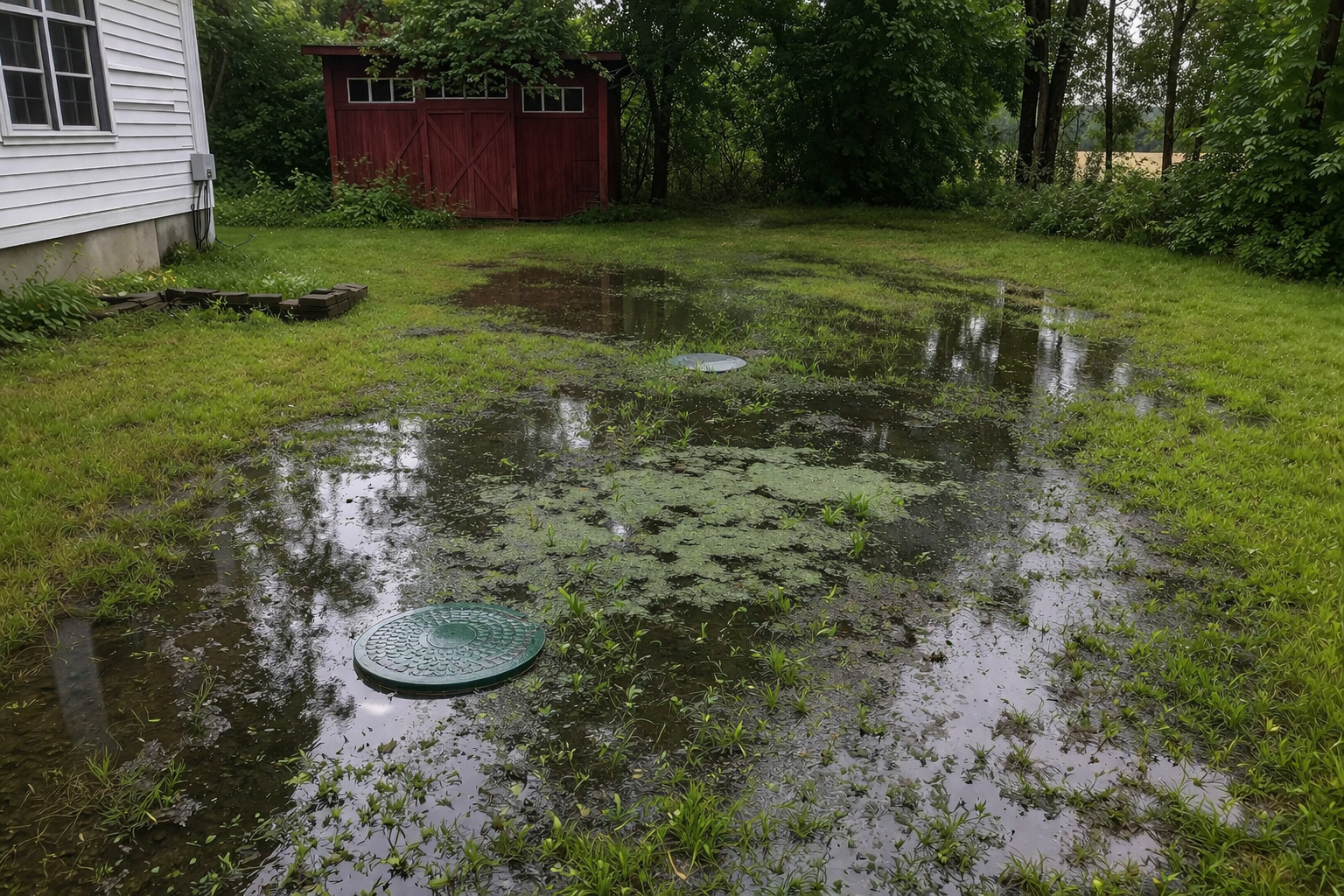
4. Standing Water or Soggy Ground Near the Drain Field


If your yard is wet despite dry weather, your septic system could be struggling.


What it means:
The drain field may be saturated and unable to absorb wastewater properly.

This is a serious sign of drain field failure and often requires professional intervention.


5. Unusually Lush, Green Grass Over the Septic Area


While green grass might seem positive, a noticeably greener patch over your septic tank or drain field can indicate a leak.


What it means:
Nutrients from wastewater are fertilizing the soil above a failing system.


6. Gurgling Sounds in Pipes


Strange bubbling or gurgling noises when you flush or run water often signal trapped air caused by blockages or a full tank.


This early warning sign shouldn’t be ignored — it may precede sewage backups.


7. High Nitrate Levels in Well Water


If you use well water, contamination testing can reveal septic problems before visible symptoms appear.


Elevated nitrate or bacteria levels may indicate your septic system is leaking into groundwater — a serious environmental and health concern.


Ready to get your septic tank on a professional maintenance plan? Reach out to Ability Septictoday to see how we can help you!


What Causes Septic Tank Failure?


Understanding the causes helps prevent costly repairs:


  • Lack of regular pumping (every 3–5 years recommended)
  • Flushing wipes, grease, or non-biodegradable items
  • Excessive water usage
  • Tree root intrusion
  • Aging system components
  • Drain field compaction from vehicles


Preventative maintenance is far more affordable than system replacement.


How Often Should a Septic Tank Be Inspected?


Most professionals recommend:


  • Inspection every 1–3 years
  • Pumping every 3–5 years (depending on household size and usage)


Regular inspections catch minor issues before they turn into full septic system failure.


When to Call a Septic Professional


Contact a licensed septic contractor immediately if you notice:


  • Sewage backing up
  • Persistent odors
  • Pooling water
  • Multiple slow drains
  • Sudden lawn changes above the drain field


Early intervention can mean the difference between a routine pump-out and a full system replacement.


Act Early. Save Money. Avoid the Mess.


A failing septic tank doesn’t fix itself — and waiting only increases the cost and health risks. By recognizing these early warning signs and scheduling routine maintenance, you can protect your home, your family, and your property value.

If you suspect your septic tank may be failing, don’t wait.


Contact our experienced team at Ability Septic at (630) 739-6907 today for a professional inspection and stop a small issue from becoming a costly emergency tomorrow.
By 7016429343 May 21, 2026
If you have a septic system, you’ve probably wondered: Can I safely use my garbage disposal? The short answer is yes—but with caution . While garbage disposals are convenient, they can significantly impact the health and lifespan of your septic system if not used properly. Let’s break down what every homeowner should know. ____________________ How a Garbage Disposal Affects Your Septic System A garbage disposal grinds food waste into small particles and sends it down your drain. In homes connected to municipal sewer systems, this isn’t a major concern—but with a septic system, it’s a different story. Your septic tank is designed to separate waste into three layers: Scum (top layer) – oils and grease Effluent (middle layer) – liquid wastewater Sludge (bottom layer) – solid waste Adding food waste from a disposal: Increases the solid load in your tank Causes sludge to build up faster Requires more frequent pumping Can lead to clogs or system overload ____________________ Pros of Using a Garbage Disposal with a Septic Tank Using a garbage disposal isn’t all bad—there are some benefits when used sparingly: Convenience for small food scraps Reduces trash and odors in your kitchen Can be safe if your system is properly maintained ____________________ Cons You Need to Consider Here’s where problems often begin: Faster tank fill-up → more frequent pumping (sometimes yearly) Increased risk of clogs in pipes and drain field Disruption of natural bacteria that break down waste Grease and fibrous foods can damage your system ____________________ What NOT to Put Down the Disposal (Especially with Septic Systems) Avoid putting these down your garbage disposal at all costs: Grease, fats, and oils Coffee grounds Eggshells Pasta, rice, and starchy foods Fibrous vegetables (celery, corn husks) Bones or large food scraps These items don’t break down easily and can quickly overwhelm your septic tank. ____________________ Best Practices for Using a Garbage Disposal with a Septic Tank If you choose to use one, follow these tips to protect your system: 1. Use It Sparingly Think of your disposal as a backup—not a primary waste solution. 2. Run Plenty of Water Always flush waste with cold water to help move solids through the system. 3. Schedule Regular Pumping Homes using disposals may need pumping every 1–2 years instead of 3–5. 4. Maintain Healthy Bacteria Avoid harsh chemicals that kill beneficial bacteria in your tank. 5. Compost When Possible Composting food waste is a septic-friendly alternative. ____________________ Should You Avoid Garbage Disposals Altogether? For many septic system owners, the safest answer is: limit or avoid using one if possible. While modern septic systems can handle some additional load, long-term use of a garbage disposal often leads to: Higher maintenance costs Increased risk of system failure Shorter lifespan of your septic system ____________________ Final Thoughts: Convenience vs. Cost Using a garbage disposal with a septic tank is a trade-off. It offers convenience in the short term—but can lead to expensive repairs if overused. Bottom line: ✔ Occasional use is okay ❌ Daily use is risky If you want to protect your septic system, reduce usage, stay on top of maintenance, and be mindful of what goes down your drain. If you’re unsure whether your system can handle a garbage disposal—or it’s been a while since your last inspection—now is the time to act. Preventative maintenance today can save thousands in repairs tomorrow. Contact our experienced team at (630) 739-6907 for all your septic system needs.
By 7016429343 May 21, 2026
If your septic alarm goes off , don’t panic — but don’t ignore it either. A septic alarm is an early warning system designed to alert you before wastewater backs up into your home or yard. Acting quickly can prevent expensive repairs, property damage, and health risks. In this guide, you’ll learn why septic alarms go off , what to do immediately, and when to call a professional. ____________________ What Is a Septic Alarm? A septic alarm is typically installed on: Aerobic treatment systems Pumped septic systems Systems with lift stations The alarm activates when water levels inside the tank become too high — usually due to pump failure, clogs, or excessive water use. It may include: A red warning light A loud buzzer A control panel with reset buttons ____________________ Step 1: Stay Calm — Don’t Ignore It Your alarm is an early warning device. In many cases, you still have time to prevent a sewage backup if you act quickly. ____________________ Step 2: Reduce Water Usage Immediately This is the most important first action. Stop or limit: Showers and baths Laundry Dishwasher use Long sink use Multiple toilet flushes The goal is to prevent additional wastewater from entering the tank while you assess the situation. ____________________ Step 3: Check for Obvious Power Issues Many septic alarms are triggered by power failure to the pump. Check: Circuit breakers GFCI outlets Recent power outages Tripped pump breaker If the breaker is tripped, reset it once. If it trips again, do not keep resetting — call a septic professional. ____________________ Step 4: Listen for the Pump If your system has a pump chamber: Stand near the tank area Listen for pump operation after running a small amount of water If you don’t hear the pump running, it may have failed. ____________________ Step 5: Press the Silence Button (If Available) Most alarm panels allow you to silence the buzzer while keeping the warning light active. This is safe — but remember, silencing the alarm does not fix the problem. ____________________ Why Septic Alarms Go Off Here are the most common causes of a septic high-water alarm: 1. Pump Failure The most frequent issue. Pumps wear out over time and may need replacement. 2. Clogged Effluent Filter A dirty filter can restrict flow and cause water levels to rise. 3. Power Disruption Storms or electrical issues can temporarily disable the pump. 4. Excessive Water Use Heavy laundry days, hosting guests, or long showers can overwhelm the system. 5. Drain Field Saturation After heavy rain, the drain field may not absorb wastewater efficiently. ____________________ When to Call a Septic Professional Call immediately if: The alarm stays on after reducing water use The breaker continues to trip You notice slow drains or sewage odors Water begins backing up into sinks or toilets There is standing water near the septic area Ignoring a septic alarm can lead to full septic system failure , which may cost thousands of dollars in repairs. ____________________ What NOT to Do ❌ Don’t keep resetting the breaker ❌ Don’t continue using large amounts of water ❌ Don’t open the septic tank yourself ❌ Don’t ignore the alarm hoping it will stop Septic tanks contain hazardous gases and bacteria. Leave inspections and repairs to licensed professionals. ____________________ How to Prevent Future Septic Alarm Issues Preventative maintenance can reduce emergency calls: Schedule inspections every 1–3 years Pump the tank every 3–5 years Avoid flushing wipes, grease, or non-biodegradable items Spread out laundry loads Install a high-quality effluent filter Routine maintenance is far more affordable than emergency repairs. ____________________ Frequently Asked Questions About Septic Alarms Is it safe to shower if the septic alarm is on? It’s best to avoid showering until the issue is identified. Reducing water usage helps prevent backups. Will the septic alarm turn off on its own? If caused by temporary high water usage, it may reset after levels drop. If not, professional service is needed. Is a septic alarm an emergency? It can become one quickly. Treat it as urgent to prevent sewage backup. ____________________ Time Matters When Your Septic Alarm Sounds When your septic alarm goes off, it’s doing its job — warning you before a bigger problem happens. Acting quickly by reducing water usage and calling a septic professional can protect your home, health, and wallet. If your septic alarm is currently sounding, don’t wait. Early action today can prevent a costly septic disaster tomorrow. Contact the Ability Septic team at (630) 739-6907 and we'll take care of the rest.
septic pumping services
May 6, 2026
Taking care of your septic system is a non-negotiable part of property ownership. Keep reading to learn about who to contact for septic pumping services.
Show More →